
'Hypergamy', then and now
How the neohypergamy concept differs from old hypergamy, and why dating apps aren’t as unequal* as you think

Hypergamy is how Joe Rogan likes his meat… extra gamy. Before booing, ask yourself whether Joe or anyone at his Comedy Mothership has ever dropped a better one-liner. That’s what I thought. Beyond the laughs, the joke also serves as a subtle critique of the ambiguity of the term. This controversial concept, relating not to meat but to mate preferences, will be explored, as well as its evolution into the meme we know today.
The old hypergamy
Traditionally, ‘hypergamy’ has described the tendency of women to marry men of higher status than themselves. Even here, the term is not free from ambiguity: status can refer to education, income, occupational prestige, family background, or social prestige.1 Additionally, in some cases it refers to the pairings themselves, and in others to a preference on the part of women.
A series of studies have documented a predictable decline in educational hypergamy, alongside a corresponding rise in ‘hypogamy’. Esteve et al. (2016) and Erát (2021) found across many countries a strong association between the reversal of the gender gap in education and the decline of hypergamy and increase in hypogamy. Urbina et al. (2024) critique these studies however, pointing out that homogamous couples were excluded from their analyses.
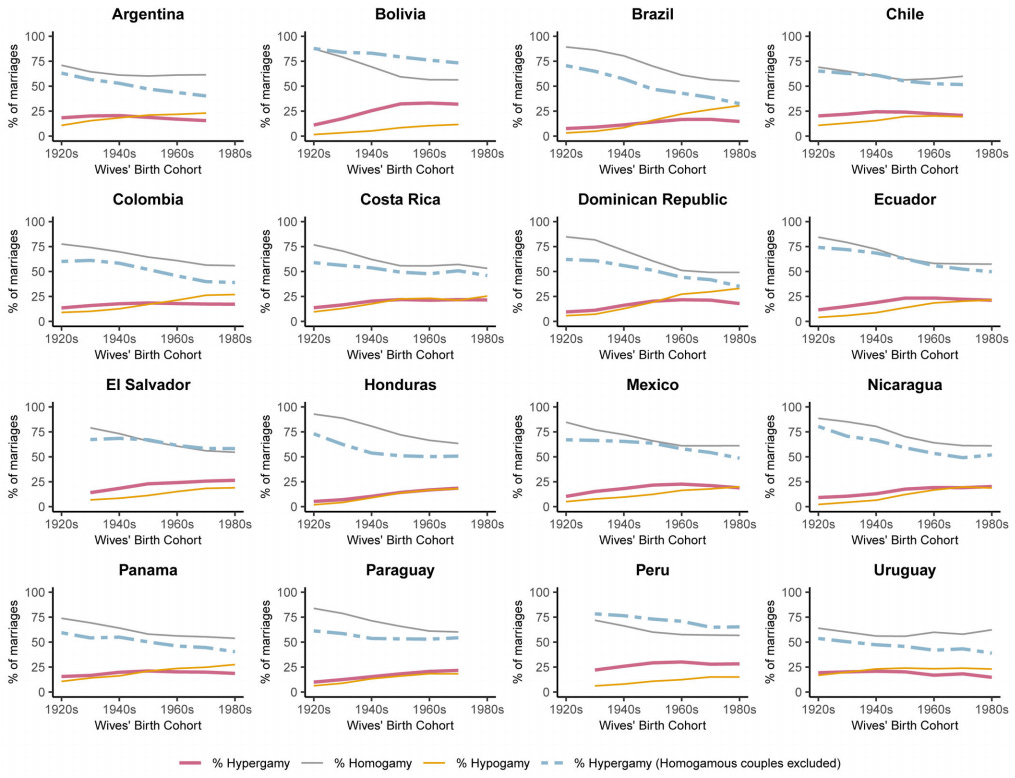
Using census data from across 16 countries in Latin America, they show that when hypergamy is measured relative to all marriages, it has actually increased in most countries over time, while homogamy has declined. However, hypogamy has risen more sharply, suggesting that there are simply more heterogamous unions in general. Part of this may be due to people marrying later, meaning less sorting by education.
By contrast, Leesch & Schopek (2023) found in Ireland rising educational homogamy along with hypogamy.
Women are also beginning to outearn men in some places too, leading to a growing share of wives earning the same or more than their husbands in the US.
What are the implications, if any, of these trends?
Among marriages formed since the 1990s, wives with more education than their husbands are now no more likely to divorce than other couples (Schwartz and Han 2014). Similarly, Theunis et al. (2017) analysed 458,499 Belgian marriages between 1986 and 2001, finding that educational hypogamy wasn’t associated with higher divorce rates than homogamy in communities where hypogamy was common. Contrary to expectations, marriages in which the husband was more educated had the highest divorce rates. Marriages with at least one highly educated partner were less prone to divorce overall.
Schwartz & Gonalons-Pons (2016) examined US data from 1968–2009 and found that wives’ relative earnings were associated with a higher divorce risk among couples married in the late 1960s and 1970s, particularly when the wife outearned the husband, but this was no longer true for couples married in the 1990s. The decline of the male breadwinner role may have shifted cultural expectations around marriage. Reduced affordability have also increased the incentive for dual-income households and may have encouraged more willingness to compromise.
At least in Western contexts, an increase in hypogamous unions doesn’t seem inherently destabilizing. In societies and areas where traditional gender roles persist and income hypergamy is expected, women’s economic advancement may create friction in the marriage market. Chung & Lee (2022) found in South Korea data from 2008 to 2018 that marriage rates were higher in regions with more men who outearn women. This effect was influenced by local cultural norms and hadn’t weakened in recent years – although the narrow timeframe limits the confidence of the conclusion.
[have been shown some things; may add here at a later date]
Most hypergamy studies have focused on the status of the bride and groom themselves, but Clark & Cummins (2025) took a different approach. Analysing 33 million marriages and 67 million births in England between 1837 and 2021, they measured hypergamy by the relative status of the birth families of the partners, operationalized as occupational status scores. They argue that measuring status by women’s relative educational attainment doesn’t accurately capture the social class of marital partners in earlier periods, and therefore fails to reveal whether women historically experienced social mobility through marriage.
Strikingly, very little evidence of hypergamy was found across the periods observed, with the average status of women’s fathers effectively equalling that of their husbands’ fathers. Additionally, for marriages from 1912–2007, the average social status of partners’ surnames was equal.
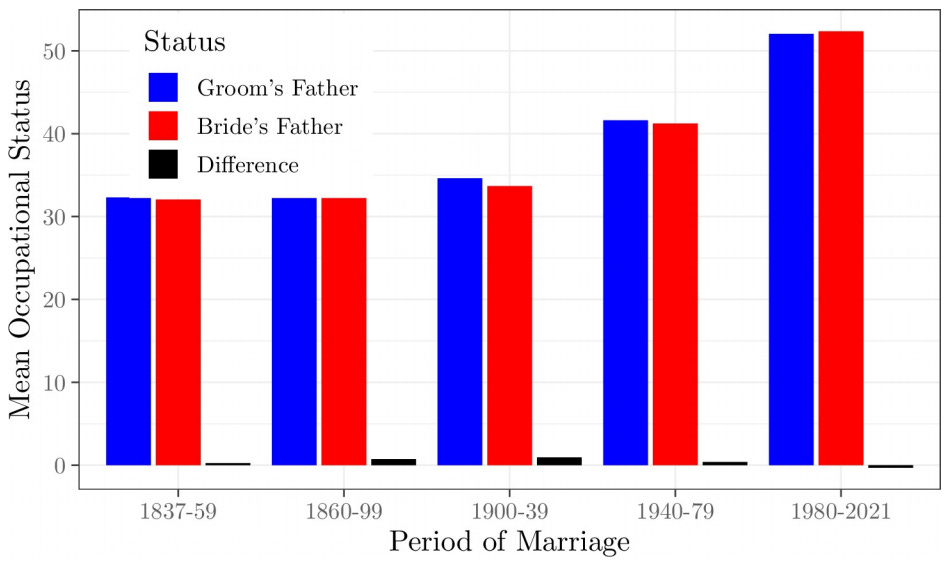
The authors contend that if hypergamy were primarily driven by men trading status for beauty, larger age gaps should predict larger differences in family status. While there was an association, it was very small – even for extreme age gaps, the difference amounted to only 1.5 points on a 100-point scale.
A more or less equal gender ratio combined with monogamy restricts the room for this kind of hypergamy to operate, but in principle, it could occur via the exclusion of low status men and higher status women from the marriage market, or sequential ‘sharing’. Analyses of marriages in the US from 1900–1940 and 1988 likewise found no evidence of hypergamy when measured using paternal occupation status or wealth. Almås et al. (2023) found some evidence of this in modern Norway, though the effect size was similarly trivial: the family income of ever-partnered men was at the 51.6th percentile, compared with 51.2nd for women – a 0.4% difference. The average percentile ranks based on maximum earnings 2–5 years before match were 54.9 for men and 54.4.
These findings suggest that hypergamous preferences may exist in certain societies, with women who outearn men being less likely to marry or to have their marriages succeed. There is some evidence that income-hypergamous unions were more stable in the past, but little evidence that this remains true in the modern US. All else equal, most women would likely prefer a rich man, but a specific requirement to be economically subordinate seems more flexible and culturally contingent than some may have assumed.
Educational hypergamy is declining relative to hypogamy as women overtake men in higher education, but it may still be rising overall in most countries, possibly due to weaker educational assortment as marriage increasingly happens after schooling. Another possibility is that online dating is increasing educational heterogamy by reducing meetings in shared environments. It doesn’t seem to matter much for relationship stability though.
Murphy et al. (2026) suggested that ‘partner preferences for resources adapt to income and gender economic inequality’, though this relied on simulated environments and stated preferences. But it’s more than possible that women are prioritizing physical traits more than before, while men may even be beginning to take women’s socioeconomic status into account. The latter seems less likely, but who knows.
Of course, until recently, the great majority of pairings were hypergamous by default in terms of income or education. When women lacked financial independence, a hypergamous preference might’ve been more a matter of economic necessity. Also, in the past and in cultures where hypergamous norms are perhaps strongest, marriage decisions are more heavily guided by families. The conception of hypergamy as a ‘mating strategy’ is a bit of a leap, but it’s not absurd to posit that a relevant preference could have evolved if it aided offspring survival.
Online, polygyny is often seen as largely driven by hypergamous choice, yet again, it was typically practiced with little input from the wives, and their revealed preferences show that when women have more optionality, polygyny rates decline – the opposite of what online hypergamy theorists say.
Anyway, while these studies offer some insight regarding the traditional sociological conception of hypergamy, they have little to say about the contemporary iteration into which it has mutated.
The new hypergamy
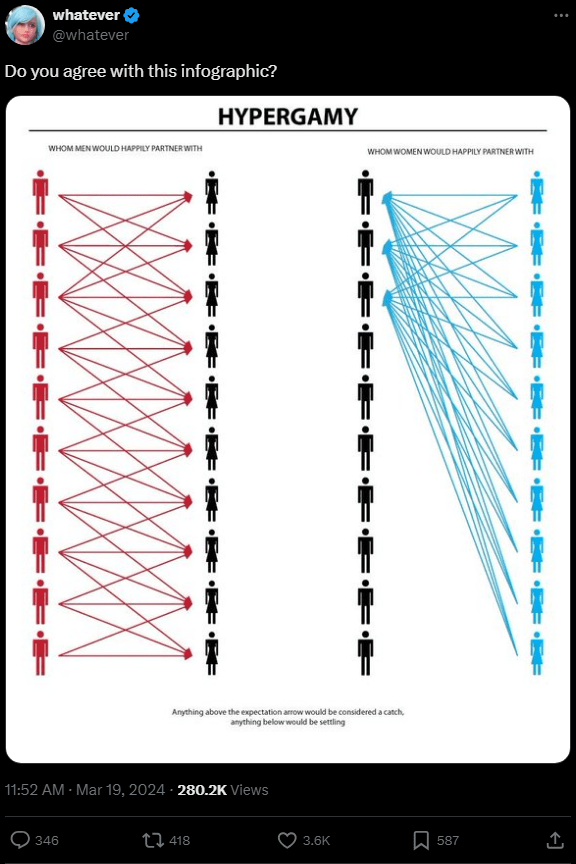
The old conceptualization of hypergamy which at most amounts to women having a preference for men higher in a status hierarchy was insufficiently dramatic and outrage-inducing. The ‘hypergamy’ you encounter on incel forums, TikTok reels, and manoslop podcasts is a different beast.
Here, rather than status, it primarily pertains to physical attractiveness. It’s less about women preferring partners above themselves per se, so much as being interested in only a small fraction of men. Put differently, it’s more about an absolute standard than relative position, which I believe is a meaningful difference. More common than ‘4/10 women want a 5/10 partner’ is ‘all women only want Chad’.
The supposed implications of this modified conception of hypergamy (hereafter ‘neohypergamy’) are multiple, but it’s most commonly invoked to denote a specific idea that fans of the blog are probably tired of hearing rehashed, but here goes anyway.
Neohypergamy is often used synonymously with the Chadopoly meme, sometimes called ‘soft/de facto polygamy’ or the infamous ‘80/20 rule’. The latter has gradually fallen out of favour though, as it’s become more common to hear 10%, 5%, or 1% – a rhetorical escalation that hasn’t been accompanied by a corresponding escalation in sexual inequality. Because women can’t all have ‘Chad’ to themselves, they must share. This ‘sharing’ takes the form of simple hook-ups, FWBs, or nominal ‘relationships’ with ‘Chads’ who unbeknownst to them are ‘spinning plates’, but rarely actual polyamory/polygamy, as for one thing it would be easier to notice – secret Chad caves aside.
As the story goes, once women ‘hit the wall’ at 30, they realize they aren’t locking down a ‘Chad’ and that their ‘SMV’ has plummeted, so they settle for a ‘beta provider’. This phenomenon is often summarized as ‘beta bucks, alpha f*cks’. Ironically, this ‘settling’ would align more closely with hypergamy in its original sense. At the same time, it’s often said that women no longer ‘need’ men; I guess the idea is that they’re still seen as worth leeching from. Relationships with ‘sub-8’ men are said to inevitably end in dead bedrooms, infidelity, and divorce/‘monkey-branching’. This means that no matter the attractiveness level of the man a woman is dating, it’s cast in a negative light.
Another possible outcome of ‘only wanting Chad’ is women opting for celibacy and cats, but this isn’t as popular a narrative, I guess partly because it doesn’t generate the same envy or moral outrage, and partly because of certain viral meme stats that give the false impression of gendered trends.
So, neohypergamy diverges from the original concept in four major ways:
It emphasizes physical attractiveness over any form of status.
It focuses more on promiscuity and ‘dating’ than marriage.
It’s more about men’s absolute attractiveness than upward selection per se.
It’s portrayed as an innate feature of ‘female nature’, while old hypergamy doesn’t speak to this.
In other words, it’s almost nothing alike, and this muddling of concepts causes people to talk past each other. A ‘mid’ woman hooking up with a hot bum would be labelled ‘hypergamous’ even though in the original sense of the term it’s irrelevant at best, since the concept referred to marriage, and the inverse at worst since she is likely mating down in status. It’s sometimes implied that women’s economic independence didn’t reduce hypergamy, but rather enabled it.
Now, the fact that one term that once meant something now means something else doesn’t necessarily invalidate the concept. Language isn’t static. The issue is when people equivocate, which this term has been extensively subjected to. When neohypergamy is challenged, to lend it scholarly weight it will often be pointed out that ‘hypergamy’ is an established concept taken seriously in fields such as sociology, anthropology, and evolutionary psychology2 – even though its usage in these contexts is completely different. The 80/20 rule or Pareto principle is a similar case: how can you deny a law of the universe!?3
In his 2006 essay Sexual Utopia in Power, OG neohypergamist Christopher Moore4 lays out what would go on to become this modern version of hypergamy. Again, unlike the traditional conception of hypergamy – which is about upward selection – this updated version implies the more absolute belief that only the most sexually attractive men are worthy of women, leading to the ‘rejection of most males’:
An important aspect of hypergamy is that it implies the rejection of most males. Women are not so much naturally modest as naturally vain. They are inclined to believe that only the “best” (most sexually attractive) man is worthy of them.
He states that while it’s impossible for the perfect man to be the exclusive mate of all the women who desire him, women can still ‘mate hypergamously with the most sexually attractive men’:
It is possible, however, to enable women to mate hypergamously, i.e., with the most sexually attractive (handsome or socially dominant) men.
Hypergamy is an ‘irrational instinct’ that is ‘distinct from monogamy’:
This cannot be objectively true, of course. An average man would seem to be good enough for the average woman by definition. If women were to mate with all the men “worthy” of them they would have little time for anything else. To repeat, hypergamy is distinct from monogamy. It is an irrational instinct, and the female sexual utopia is a consequence of that instinct.
Chads acquire harems simply because they’re attractive:
Once monogamy is abolished, no restriction is placed on a woman’s choices. Hence, all women choose the same few men. If Casanova had 132 lovers it is because 132 different women chose him. Such men acquire harems, not because they are predators, but because they happen to be attractive.
Though he doesn’t entirely abandon the status aspect of hypergamy, as husbands being slightly older than wives on average is cited as evidence of hypergamy:
In fact, this is just one more example of hypergamous female mate selection. In most marriages, the husband is at least slightly older than the wife. Normal women tend to be attracted precisely to men in positions of authority.
As far as I’m aware, this is the first time the incel narrative was explicitly laid out in writing. I’m not sure exactly how much influence this essay had specifically; though it reportedly influenced some early red pill and PUA bloggers such as Heartiste. I believe that even without it, this idea would be popular today however, as the same misperceptions and emotions motivating it have only been amplified with dating apps and the ‘hook-up culture’ meme.
Essentially, neohypergamy imagines humans as a ‘lekking’ species. Incidentally, a favourite of neohypergamists is this diagram of Fisherian runaway theory, which has been invoked to explain extreme or ostentatious male ornaments in various species.
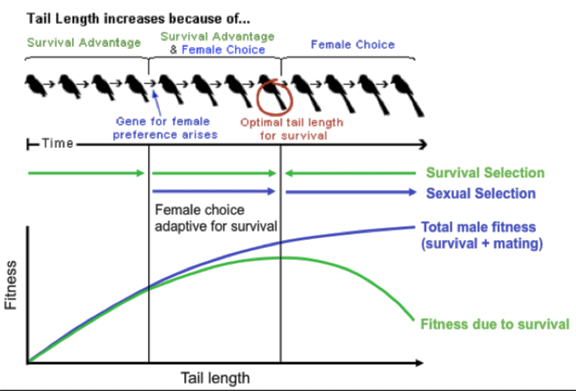
Unfortunately, human males don’t seem to have been sculpted into a race of giant gigachad hydras, despite neohypergamists’ belief that mass polygyny has been present throughout human history.

This meme is ridiculously pervasive in general, but beyond incels is perhaps shouted loudest by so-called ‘post-liberal’ reactionaries who seek to impose their preferred moral order on society. Neohypergamy is increasingly invoked to justify a restructuring of society: this is the dystopia that unfolds when you let people do what they want!
Unrestricted neohypergamy has been blamed for delayed or foregone marriage, fertility declines, social instability, political polarization, and even rising autism rates. The tone has grown increasingly histrionic and apocalyptic, with chudslop dealers like whatifalthist and hoemath prophesying calamities from civil war to societal collapse and young men dropping out en masse. Neohypergamy is often blamed for incel violence, with one evolutionary psychologist calling it a manifestation of ‘young male syndrome’ and essentially tying it to the black pill conception of the dating landscape.
After the Toronto van rampage in 2018, Jordan Peterson infamously said that enforced monogamy would’ve prevented it:
“He was angry at God because women were rejecting him,” Mr. Peterson says of the Toronto killer. “The cure for that is enforced monogamy. That’s actually why monogamy emerges.” Mr. Peterson does not pause when he says this. Enforced monogamy is, to him, simply a rational solution. Otherwise women will all only go for the most high-status men, he explains, and that couldn’t make either gender happy in the end. “Half the men fail,” he says, meaning that they don’t procreate. “And no one cares about the men who fail.” I laugh, because it is absurd.
“You’re laughing about them,” he says, giving me a disappointed look. “That’s because you’re female.” […] In situations where there is too much mate choice, “a small percentage of the guys have hyper-access to women, and so they don’t form relationships with women,” he said. “And the women hate that.”
Since these men were autistic, they would have faced issues regardless of the state of the ‘mating market’ – and not just in dating – so there’s no obvious need to invoke broad systemic marginalization to explain why they ended up where they did.
Nick Fuentes parrots neohypergamy talking points about Chad to steal away all the women (‘we’ve all seen the dating app statistics’), claiming that this imagined Chadopoly that is destroying society is the end result of ‘feminism’, ‘individualism’, ‘liberalism’, and ‘rationalism’:
Without the constraints of shame, marriage, monogamy, morality, this is just the way it is – the haves, have nots – very unstable society, very brutal society. It is the reality; we all have to deal with it. We have to live in reality; we can’t be in denial about these things. But there is something tragic here, which is that this really is the implication and the logical end state of women’s liberation; this is the logical end state of feminism. And what is feminism and women’s liberation but the logical conclusion of individualism and liberalism, rationalism?
So a lot of people take it very seriously, insisting that urgent action is required.
There’s a certain irony in those who claim to champion hierarchy arguing for the flattening of the sexual hierarchy they imagine benefits ‘Chad’. Joe Rogan, ever the astute observer, questioned how Jordan Peterson reconciled his ‘enforced monogamy’ with opposition to enforced equality of outcomes.
One could argue that it’s not an absolute endorsement of hierarchy but depends on the end result; yet enforced monogamists typically claim to oppose utilitarian reasoning, so you’d run into another inconsistency. Then again, few people are perfectly ideologically consistent, and most can probably imagine exceptional cases which would cause them to suspend their usual commitments.
Slopcasters have also hinted at the need to ‘intervene’ and ‘put systems in place’:
In a July episode that has since gone viral, a psychiatrist named Alok Kanojia refers to men who can’t find partners and procreate as a “mass extinction event,” a phenomenon that he and Bartlett then compare to genocide and cancer. “Does society have a responsibility to intervene in some way, to course correct this?” Bartlett asked Kanojia. “Should we put systems in place to make sure those men meet partners?
Slopcasts run on alarmism and sensationalist idiocy, so a neohypergamy-driven societal collapse is right up their alley, and when people spend hours pontificating into their fancy microphones about the ‘issues of society’, this narrative is bound to come up a lot.
Few may have caught on, but the meme of polygynous mass promiscuity facilitated by dating apps has been officially debunked. There is no increasing skew in men’s sexual partner distribution, which remains remarkably similar to women’s; there has not been a rise in promiscuity; and there is no sex imbalance in dating app outcomes such as dates and sexual encounters on the population level.
Another dimension of neohypergamy – a large gap in within-sex attractiveness between men and women who date or have sexual encounters through dating apps – has been less specifically addressed. We can imagine a scenario in which the same percentage of men and women engage through dating apps, but the men who do are on average significantly more attractive than the women. Additionally, it’s possible that these attractive men pull these women from the dating market while continuing to ‘play the field’ in ‘meatspace’.
However, since there isn’t good evidence for a uniquely male rise in sexlessness, this scenario seems unlikely. In the first scenario, a common claim is that men lower their standards for short-term engagements. An attractiveness gap between dating app matches wouldn’t necessarily reflect an effect of the apps if it is a product of broader sexual strategies, though it’s at least conceivable that apps have accentuated a pre-existing pattern.
The conventional narrative most people have been convinced of is that dating apps are a hyper-efficient facilitator of neohypergamy. By increasing market efficiency, they supposedly allow women to easily date men out of their league, while Chad feels no incentive to commit and creating an endless cycle of heartbreak. Previous articles have covered the effect of attractiveness and desirability in online dating websites by sex, so let’s get this out of the way before tackling the final question regarding dating apps and hopefully putting a bow on this.
‘Hypergamy’ on online dating websites
Neohypergamy and online dating frequently appear in the same discussion. This connection rests on two basic observations: the average man receives significantly less attention on online dating than the average woman, and more attractive men receive significantly more attention than less attractive ones. The assumed outcome is almost always the Chadopoly meme.
It’s relatively uncontroversial that men tend to prefer more attractive women; 500 pound grandmas don’t rank high in porn categories. This doesn’t necessarily manifest in men and women’s behaviour the same way… but it more or less does. Since a 2009 blog post from OkCupid, we have known that this preference results in similar messaging behaviour for both sexes. I won’t rehash the details here, but the fact that the OkCupid ratings are still being peddled out as ‘proof’ of neohypergamy 17 years later is a testament to the meme’s resilience to facts.
Another example comes from Bruch & Newman, who measured the desirability of profiles on a popular online dating site using PageRank – an algorithm that ranks someone based on how many people contact them and how desirable and selective those people are themselves. While not a direct measure of physical attractiveness, profile desirability is largely determined by it, and at the very least allows us to test a broader definition of hypergamy.
On average, men tended to message profiles about 26% above their own desirability, while women did 23%, though the modal message went to profiles of equal desirability. Sender desirability also similarly influenced reply rates, with senders roughly twice as likely to receive replies from significantly less desirable profiles than from more desirable ones.
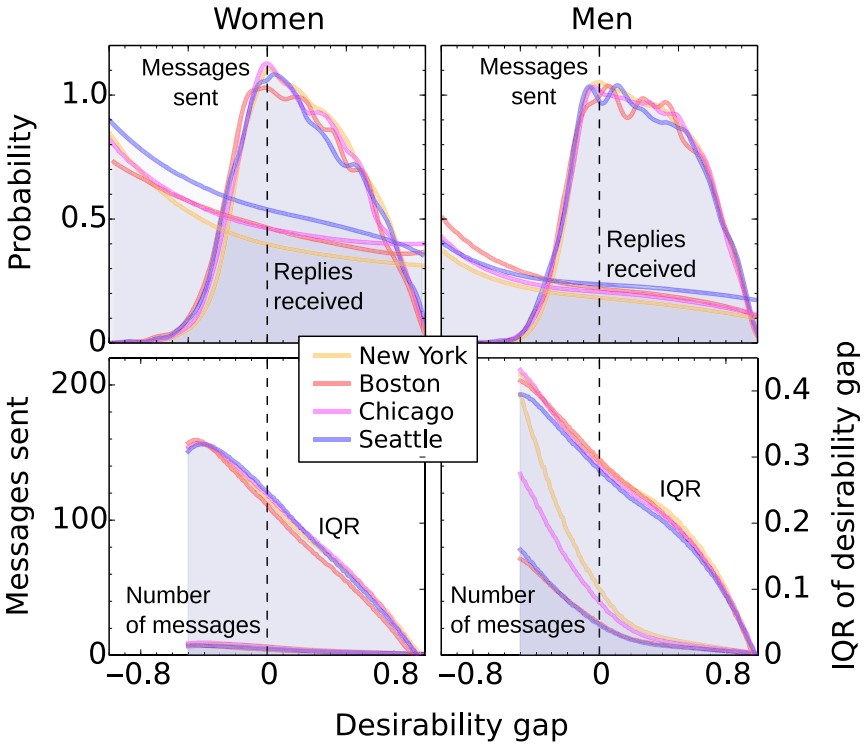
It’s worth mentioning that over 80% of initial messages were sent by men. A similar pattern appears with dating app matches, though in this case women’s messages are less likely to be answered, perhaps because of mismatches caused by the mass-swiping of some men. Of course men are also overwhelmingly the initiators of dates in real life, so it’s not like this is a uniquely online pattern of behaviour.
Since the effect of desirability on receiving an initial message seems greater than that on receiving a reply, and men sent a disproportionate share of initial messages, this could’ve given men a ‘pursuer’s advantage’. Women’s higher overall chance of receiving a reply would help to counterbalance this though, and Kreager et al. found that repeated message exchanges tended to occur more commonly between similarly desirable partners.
Studies find that consensually rated attractiveness has either an equal effect for men and women or a stronger one for men. A study using data from HOTorNOT.com found that men were more influenced by consensual attractiveness than women, and less affected by their own attractiveness. In a field experiment, Egebark et al. (2021) found that while women received more responses overall, the effect of photo-rated attractiveness on the likelihood of receiving a reply was equal for both sexes, and people preferred more attractive profiles regardless of their own attractiveness.
There was on the other hand some evidence for old hypergamy, but this was driven by men preferring less educated women, while women showed no preference either way. Neyt et al. (2019) found that conversely, education had a positive effect on men’s but not women’s chance of being selected on Tinder. Again though, neohypergamists are rarely interested in educational hypergamy.
In summary, both men and women prioritize messaging more attractive people over less attractive ones, and by extension tend to message and reply to people higher in (within-sex) attractiveness than themselves (unless there isn’t much room above themselves). Is this ‘hypergamous’ behaviour? I don’t know; by the common usage of the term – ‘Chad gets all the attention’ – it would be, but in that case it’s a near-universal human behaviour rather than something uniquely female.
Sending a message is low investment and risk, so it’s not surprising that men try their luck – but a steeper desirability curve for men’s message success rate than women’s isn’t observed either. The question is: do these patterns carry over to modern dating apps?
‘Hypergamy’ on dating apps
A common critique of data from traditional online dating websites is that it’s outdated in the age of swipe-based apps. Unlike dating websites where you could generally message anyone you wanted to, messaging is gatekept by the matching process. Additionally, the data is reasonably old – but I’m not sure how salient this critique is, the claim is that hypergamy was only activated in the past decade for some reason.
Fundamentally, the process in dating apps isn’t too far removed from traditional websites. On websites, people would send messages and hope for a reply; on apps, people swipe right and hope it’s returned. The main difference is that on online dating websites, you could customize your message and write a more thorough profile, whereas on apps differentiation is more front-loaded into photos and bios, incentivizing snap judgments.
Neohypergamists tend to say those kind of factors don’t matter though – and honestly they may not make a big difference. Bruch & Newman observed that both sexes tended to write longer messages to more desirable partners, but the payoff was limited. Regardless, it’s not clear why this additional differentiating factor would negate neohypergamy. Instead, the ‘top x%’ may have simply been less singularly determined by looks.
I was able to find a good amount of data on actual outcomes, which showed comparable rates of men and women in the population meeting up, forming relationships, and having sex through dating apps. One question that wasn’t fully answered is how attractive are the men and women who match on average? Are women more likely to swipe right on and match with profiles more attractive than themselves, as is typically assumed?
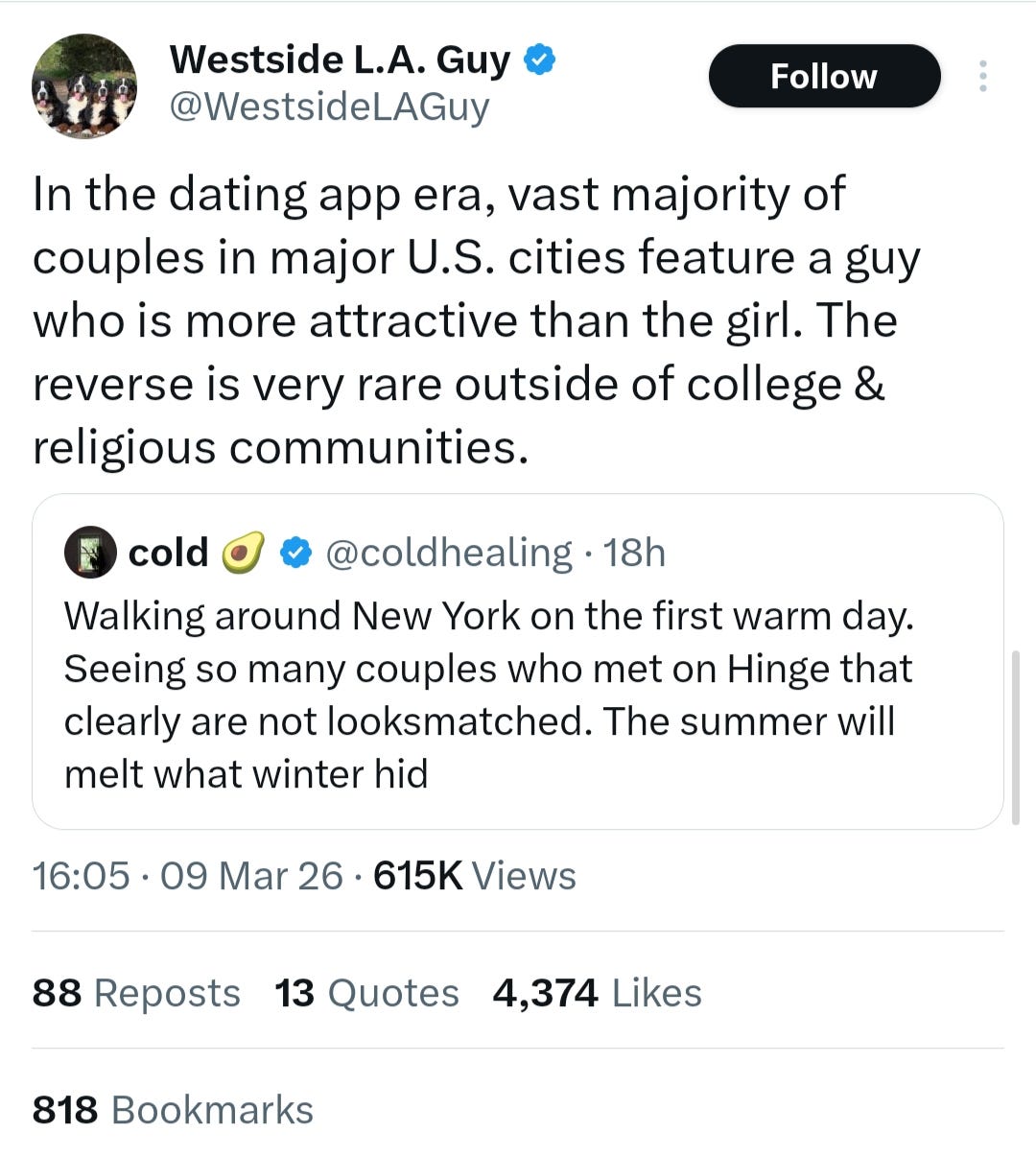
The most cited data regarding dating apps is swipe rates between men and women: men swipe right on a lot more profiles. There is usually a mental jump from this to ‘most women are matching with Chads’, then to ‘most women are meeting Chads’, and finally to ‘most women are having sex with Chads’, while the rest of the men fight to be noticed by Jabba the Hutt’s long lost wife.
This is a popular meme graph that is periodically reposted by an evolutionary psychologist who co-authored a paper that argued that the ‘males-compete/females-choose’ model is misleading when applied to humans, who have a system of mutual courtship. He may not see this as in conflict, but most people who see the graph have the naïve impression of peacockish neohypergamy.
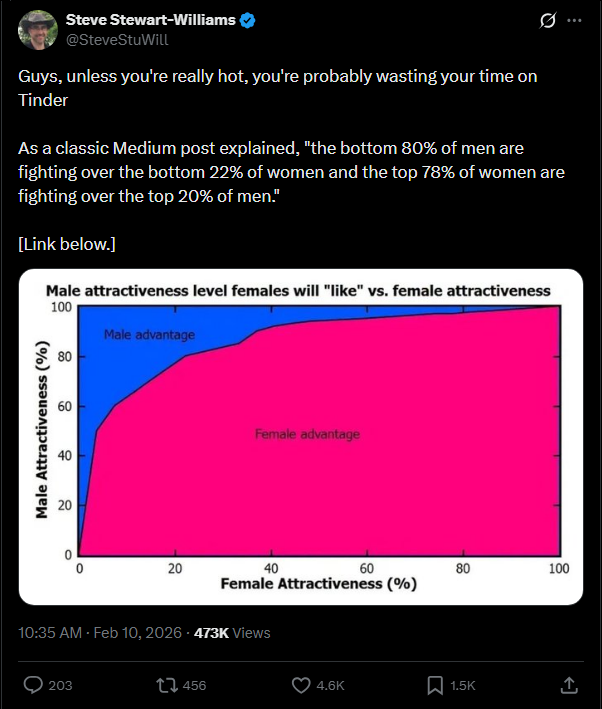
This graph is popular because it’s visually striking and validates men’s frustration with struggling to get matches. But what is it based on? It’s extrapolated from the reported percentage of profiles liked by 27 women polled on Tinder by what was effectively a ‘Chadfish’ account.
Here is what he calls the ‘biggest flaw in the analysis’:
I am only accounting for the percentage of “likes” and not the actual men they “like”. I have to assume that in general females find the same men attractive. I think this is the biggest flaw in this analysis, but currently there is no other way to analyze the data.
As covered previously, variation in attractiveness preferences is greater than commonly assumed, and this seems to be especially true among women. Nonetheless, the simple facts that some men are generally considered more attractive than others and that these men are more popular on dating apps are uncontroversial.
But what about the other side: is men’s attention towards women markedly more evenly distributed? Data on the male skew in likes received on Hinge is oft-cited, but the female distribution shows a relatively similar pattern. The male distribution is slightly more concentrated at the top, with a Gini coefficient of 0.73 compared with 0.63 for females.
Data from a study on Tinder users shows that match inequality is similar for both sexes, with the top 20% of both men and women accounting for about 87% of total matches. The top 10% of men held 75.7%, while the top 10% of women held 73.3%. For the top 5%, it was 63.2% and 55.2%, respectively.
Activity levels naturally affect how many matches a person accumulates, so someone with many matches may simply be more active than someone with few. We could imagine a scenario in which the men with the most matches tend to be highly desirable, while the women with the most matches are primarily the least selective and most active.
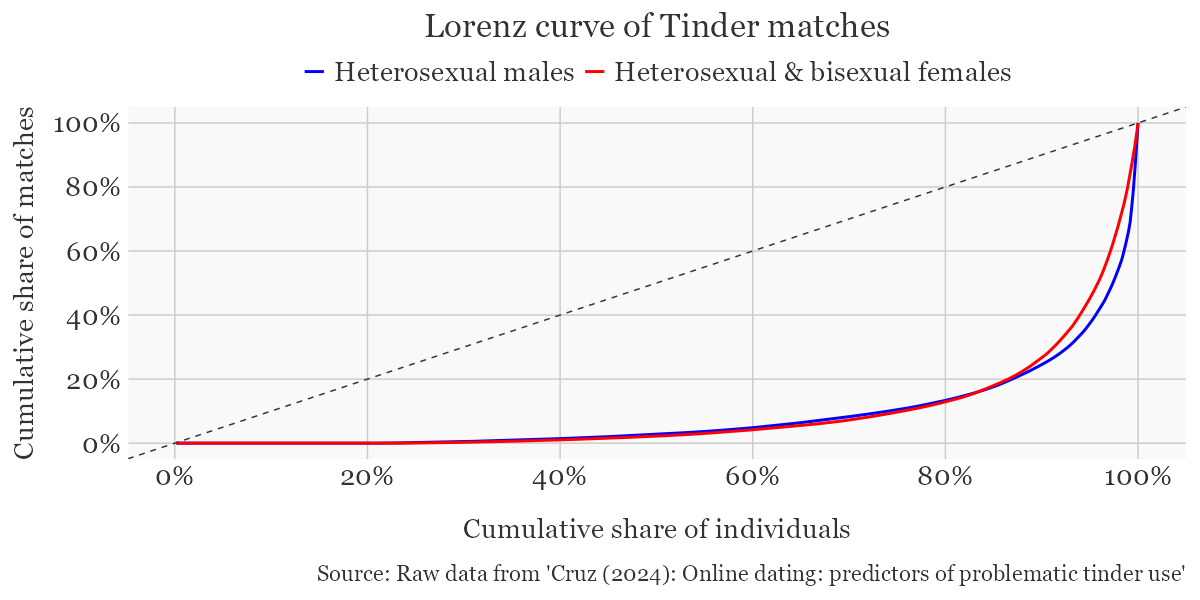
To my knowledge we haven’t had good data from dating apps to determine whether matches follow a neohypergamous pattern in terms of desirability – until this bombshell study dropped, which looked at both the desirability skew within each sex and the desirability difference between matches.
The authors analysed data from a Czech dating app, focusing on heterosexual users active in July 2017. They examined users’ first swipes and any reciprocated swipes in two dating networks: Brno, with 624 users (79.6% male) and 5,260 swipes, and Prague, with 2,321 users (75.1% male) and 36,665 swipes.
Across both networks, they found a desirability skew for both genders, which was actually more pronounced among women:
In the Brno network, the value of 0.15 for men suggests the incoming swipes are centralized for about 15% of their maximum possible centralization, while this reaches 34% for women. This is similar in the Prague network with indegree centralization among women far higher (21% of the maximum) than among men (11%), pointing at substantially steeper hierarchy among women than among men as the differences in the number of incoming swipes is much more pronounced among women in both networks.
When it came to overall desirability, a pattern similar to that seen on OkCupid emerged wherein even high-desirability men received fewer swipes than low-desirability women.
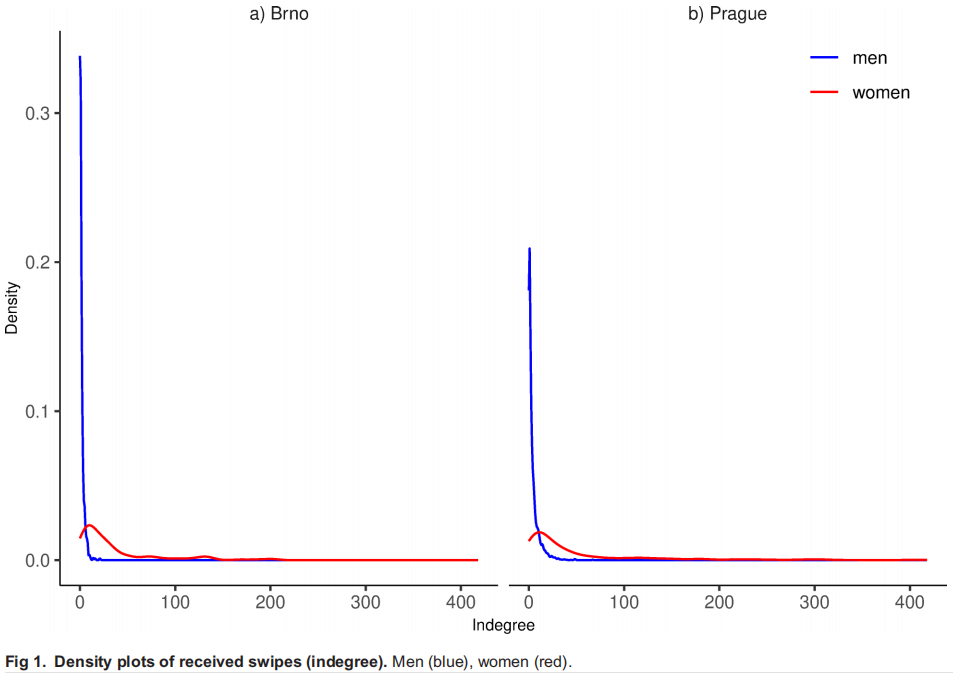
At the same time, in a counterintuitive twist the difference in standardized desirability between swiper and swipee was slightly positive for women, indicating they tended to swipe on men slightly below their own within-sex desirability. For men the difference was negative.
The authors then examined matches to assess how desirability-matched they were. In Brno, the mean difference in standardized desirability between matches was −0.032, and in Prague, it was −0.019 – similar to the gaps seen in women’s swiping patterns. The figure below compares the observed results to simulated networks in which swipes were randomly permuted while preserving overall swipe rates.
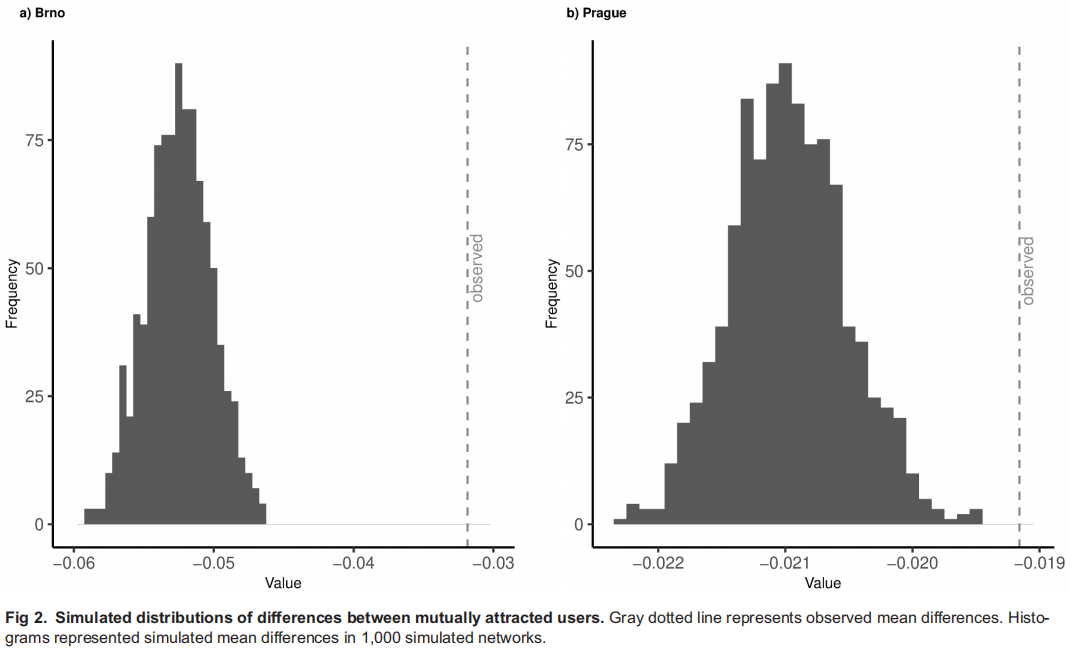
This result is somewhat surprising given men’s greater tendency to adopt a serial swiping strategy. On the other hand, because the analysis focused only on first swipes, they may have been paying more attention before falling into the rhythm.
There is a possibility that bots skewed the data, as their profiles would tend to present as attractive young women while being low in selectivity, but they took measures to account for this:
We tried to identify possible bots in the following way: we filtered out women who accepted (reciprocated) all the swipes they received, given that they have received at least 30 messages.5 We chose this criterion because there may be women who accepted all swipes because they had received only a few of them, and because women who received a lot of swipes do not have to be necessarily bots, they could only be highly desirable. After identifying such users, we omitted them from further analysis (Prague: n = 49, Brno: n = 5).
Another possible reason for the gap observed in this study is a higher consensus regarding the attractiveness of women than men. Eastwick & Smith (2018) found that participants’ own ratings of photos didn’t predict romantic desire differently for men and women, whereas norming ratings predicted desire more strongly for men, and idiosyncratic liking had a stronger effect for women.
The authors also add a caveat that women’s apparent willingness to ‘swipe down’ may be influenced by the lower variability in men’s desirability. Let’s just assume that it’s actually equal, as that’s a tough enough sell already.
As a Czech study, it may not map perfectly onto dating apps in other countries, but the basic dynamics in terms of the gender ratio and swipe rates were similar to that seen in the US, and since neohypergamy is framed as an intrinsic biological drive, it’s difficult to imagine that the cultural differences are enough to explain it.
What this shows is that, as with online dating and speed-dating studies, selecting fewer people doesn’t necessarily mean those selections are more concentrated on more consensually desirable individuals, and swiping on few profiles doesn’t mean swiping on the same few profiles – even if the swipes aren’t equally distributed either.
I’m not sure how necessary this is, but as a toy example, imagine two groups of 100 people. The first group swipes right one percent of the time on people in the bottom quintile, two percent on the second, and so on. The second group swipes ten percent on the bottom quintile, twenty percent on the second, and fifty percent on the top. The first group will have swiped on 3% of profiles, while the second will have swiped on 30% – yet the skew in swipes is identical.
We’ve already seen with online dating websites that casting a wider net doesn’t necessarily mean a reduced emphasis placed on attractiveness, as counterintuitive as that might sound. Dating apps appear to show a similar pattern, with swipes replacing initial messages and replies.
Again, when looking at actual outcomes – rather than lazy, hypersimplistic extrapolations from how frequently right-swipes are made – there is no gender imbalance among heterosexuals at the population level.
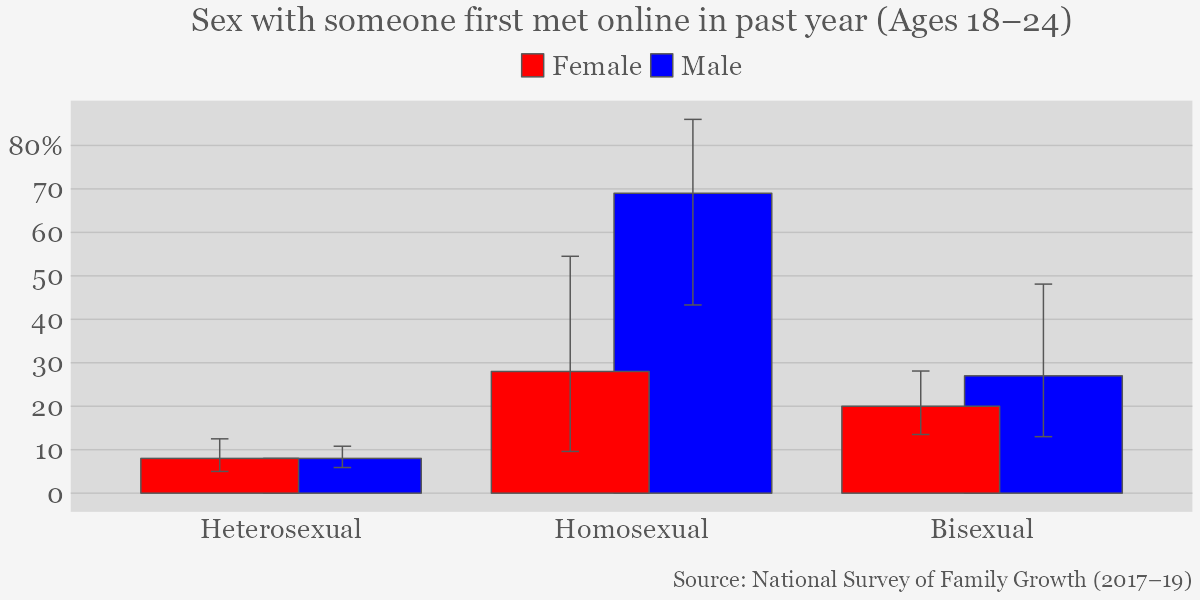
We now have all bases covered:
Equality of actual outcomes by gender.
~Equality of desirability skew.
~Equality of match skew.
~Equality of within-sex desirability between matches.
What this means is that we are dealing with a mass delusion.
Making sense of the nonsense
It’s not hard to see why this narrative resonates. Because many men don’t get what they want from dating apps,6 it makes it easy to accept any negative conclusions about them, and it’s unrealistic to expect most people to suspend their emotional response and seek a more nuanced understanding. Those who saw apps as a potential godsend due to introversion or autism will be especially disappointed, and this can lead to a distorted perspective on the dating market if they depend on them as the sole meeting avenue. Contrary to popular myth, the majority of people still meet offline, even for hook-ups.
Neohypergamists are fond of repeating the ‘facts over feelings’ line, but what feelings does neohypergamy facilitate?
Envy: Chad is having the success I want to have.
Resentment: It’s the fault of society/women/Chad.
Sense of injustice: Chad is being picked over me for no reason other than superficial characteristics.
Insecurity: Chad mogs me; I am subhuman.
Hopelessness: It’s over; Chad always wins.
Paranoia: The dating market is rigged by a Chad cabal; society is gaslighting us about it.
Excitement: An incel uprising is around the corner; I will be an epic warrior in a Mad Max-style wasteland. Chad will be at my mercy.
Basedness: I may not be Chad, but I am based and truthpilled; normies are bluepilled gynocentric cucks.
They may not be the only reason people believe in neohypergamy, but these feelings create a strong attraction to it for many. That said, while the facts are clearly against neohypergamy, I would grant that many people reject it for emotional reasons without an empirical justification. I would go as far as to say that most have very little to back up their stance, which likely contributes to the manosphere’s self-image as the side of data and studies.
Ultimately, neohypergamy is an idea that serves to advance a social justice agenda that seeks to redress perceived systemic injustices and inequalities. People see the viral meme stats, hear the talking points, and embark on a mission to proselytize and wake society up – to make people ‘woke’. Manoslop and the many ‘young male crisis’ merchants such as Scott Galloway and Steven Bartlett, feed into the moral panic with a non-stop stream of alarmist propaganda and outrage porn. The media sees their success and joins in.
One reason why neohypergamy has flourished almost unopposed is that it has something for everyone. It most obviously appeals to incels who want to lump themselves in with the majority (while simultaneously deriding ‘normies’), but it also appeals to non-incel men who are granted ‘Chad’ status by default; to reactionaries who welcome more ammunition for forming their trad reich; to leftists who feel they have failed to appeal to young men or who see it as another social justice cause; to women who like the sense of power and self-esteem it gives them; and to grifters who traffic in grievance.
Of course, it doesn’t appeal to everyone in these groups, and there is more conflict with the interests of some of them than others, but the fact that there are no large groups who are meaningfully critical of it means there is very little pushback. The immense moral indignation surrounding neohypergamy creates reflexive outrage at any take outside the conventional narrative. The more entrenched this narrative becomes and the more people work each other up over it, the harder it becomes to criticize.
After more than a decade since this narrative started gaining traction, the discussion hasn’t moved forward even an inch, and those who are supposed to ‘make sense’ of things have done absolutely nothing to inject any nuance into it or to understand in greater depth how different mechanisms and behaviours interact to produce what outcomes. To the extent that anybody belonging to the ‘intellectual elite’ has anything to say about it, they tend to have the same offensively surface level approach as anyone with a 60 IQ.7
Despite its immense popularity, neohypergamy is typically framed as a ‘brutal truth’, with believers positioning themselves as brave truth tellers. Ideas perceived as politically incorrect or edgy gain a massive advantage in the online marketplace of ideas, regardless of factual accuracy. Defending an unexciting, unedgy position requires presenting it ten times as effectively just to have a fighting chance. The debunks aren’t all that interesting like for example flat earth debunks can be, which only makes the uphill battle steeper.
It sounds almost too simple, but much of it may come down to a misperception whereby differences in desire for casual sex are interpreted as ‘women are dtf with Chad, and only Chad’, i.e. ‘Chadsexuality’. The idea that women are highly interested in casual sex and that we inhabit a ‘hook-up culture’ is extremely pervasive. As I’ve said before, if this is an underlying assumption, it naturally follows that it must be happening for only a minority of men, since most men aren’t experiencing it for themselves. These moral panics are largely intertwined, with critics of ‘hook-up culture’ and the ‘sexual revolution’ such as Louise Perry frequently using neohypergamy as a supporting argument.
‘Hypergamy’ is often used to gesture at women being more ‘selective’. The term ‘selective’, like hypergamy, is interpreted however people want. Once it’s agreed that women are more ‘selective’, black pillers will take this as confirmation of their specific conception of selectivity which is hyperpromiscuity directed at ‘Chad’. While it’s trivially true that women are ‘the selectors’ in terms of deciding whether to accept or reject a man’s advance in most cases, men’s decision about who to ask out is also a selection, and it’s not made blindly.
The interpartner correlation for physical attractiveness is about 0.4 (0.5 after correcting for attenuation), which is about what you’d expect if both sides had similar input, as the correlation between observer-rated attractiveness and being selected in speed-dates is about the same for both sexes. As shown in a previous article, the women in couples are rated as more attractive by both sexes, meaning that if anything, men are more looks-hypergamously paired – though maybe not in terms of within-sex attractiveness.
Also trivially true is that women are more ‘selective’ with who they have sex with; but this doesn’t automatically validate the incel conception of selectivity which views this selectivity not as sexual restrictiveness but of Chadsexual promiscuity. There is perhaps some debate to be had about whether casual sex shows a female looks-hypergamy pattern, even if it’s not seen in other contexts. If it does, the effect isn’t significant: the correlation between men’s attractiveness and sex partner count, including one-night stands, is weak, and it doesn’t seem like there’s a negative effect for women either – though it may be even smaller.
It’s certainly plausible that women have more deal breakers than men – such as unemployment, poor social skills, or listening to Joe Rogan – but this is rarely what’s meant by ‘more selective’ in online discourse or neohypergamy; it almost always refers to physical attractiveness. One reason for this is that attractiveness is highly moralized, so being more ‘selective’ about it is judged as particularly ‘unfair’. If women are more selective about looks it’s probably less about absolute attractiveness than it is preferences for a particular type, e.g. prettyboys vs. rugged jocks.
Finishing thoughts
I might be starting to sound like a broken record, but guess what? So is everyone repeating black pill talking points. If this blog has seemed somewhat repetitive, blame the endless regurgitation of the same memes and stats on a daily basis. It’s actually pretty remarkable to me the vacuum that exists regarding serious criticism of incel ideology considering how enormously influential it has been. I don’t really have an adequate answer for why – you’d think someone would try to capitalize on this untapped market.
Most manoslop-critical content is either its inverse (femslop) or dumb drama. There is no shortage of content mocking manotards and incels – we’re seeing plenty now with the Clavicular circus – but very little in the way of substantive analysis. They exploit this vacuum to posture as renegade scholars bringing ‘black pill science’ to the table while framing everyone else as having to resort to shaming tactics. Perhaps criticizing the manosphere from a more objective, data-based perspective simply lacks mass appeal.
While it is a stupid extrapolation, I don’t think everyone who makes it is stupid, nor that I’ve arrived at the conclusion that it’s wrong through some unique genius. There are simply strong incentives to believe or promote it, whether emotional, political or ideological, or monetary. People don’t feel compelled to scrutinize it, as it’s serving a useful purpose for them. Some just haven’t put much thought and research into it and place too much faith in consensus – whether in the broader culture or within their niche group.
When it comes down to it, ‘hypergamy’ as used online mostly functions as an edgy buzzword that is used to vent or as a slur, and the whole narrative constructed around it is pure cope. There is no there there. Yes, dating apps aren’t great; no, they aren’t triggering a hypergapocalypse. End of.
This is what it originally referred to in the context of the Hindu caste system.
Although this specific term isn’t commonly used here, and it’s usually framed in terms of absolute preferences for status/resources rather than upward selection per se.
It never occurs to them that a similar pattern could exist for women, and even must if they’re going to say the rule can never be violated.
Pen name: Francis Roger Devlin.
Messages refers to swipes here.
Though interestingly, men tend to report a more positive experience with them than women.
I’ll also add that it’s funny how of the ideas associated with the far right, they pick one of the dumbest ones to support, and in my opinion the most sensible one – hereditarianism – to reject; at least among those willing to make public statements on it – it’s likely not an uncommon view that there is a significant genetic component to both individual and group differences.
There’s no such thing as an ugly woman online due to the Simp Industrial Compex
I think the explanation for this becoming popular is much easier than the 8-point list. We are demonstrably in a recession when it comes to all forms of socialization, which includes dating/romance.
The reality is that pre-existing inequalities are going to hit people a lot harder when the floor falls out for everyone. There's a reason why redistributist social justice movements become much more popular during recessions/depressions.
I think it's probably true that in fact rich people lost a lot more money on an absolute basis than poor people during the 2007 Great Recession, but obviously the poor felt their money loss much harder, and you aren't really to debunk the "this was caused by all the evil rich people hoarding all the money" theory during an economic depression by pointing out that the rich probably lost a lot more money.